

Choosing The Right Pump
Choosing the right diesel pump comes down to matching flow, pressure and power source to your farm layout, water source and budget.
1. Start with your farm’s pumping needs
Before you look at engines or brands, get clear on what the pump must actually do.
Key questions:
- How much water do you need to move (litres per minute or hour)?
- How far and how high do you need to move it (total head: lift from source + pipeline friction + elevation)?
- How often will the pump run (a few hours a week vs continuous during irrigation season)?
- Is power available at the site, or is it completely off‑grid?
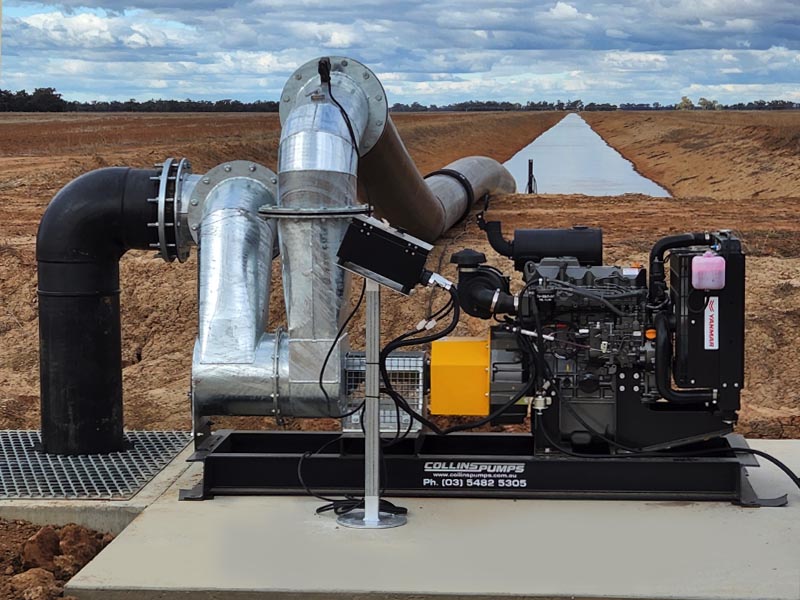
For big broadacre or flood irrigation, or long lines with elevation, a high‑flow diesel pump is usually the most practical choice.
2. Self‑priming technology explained (plain English)
A self‑priming diesel pump is a centrifugal pump designed to clear air out of the suction line by itself, so you do not have to manually fill the suction every time.
The first time you use it, you fill the pump casing with water; on start‑up the impeller spins, mixes that water with air from the suction pipe, and pushes the air‑water mix out the discharge.
As air is expelled, water is drawn up the suction line until both the line and pump are full of water and normal pumping begins.
Because the casing holds some water after shutdown, the pump can “self‑prime” again next time, saving time and reducing the risk of running dry if the suction fluctuates.
On farms, this is ideal where suction lines are a few metres above creeks, channels or dams and you want fast, reliable starts without constant manual priming.
3. Diesel vs electric pumps – which suits your farm?
Both diesel and electric-driven pumps can work well; the right choice depends on power access, duty cycle and cost profile.
Diesel strengths:
- Independent of the grid, so perfect for remote river offtakes, travelling irrigators and backup during outages.
- Very strong for high flows and high heads, moving large volumes between dams or up long, high-friction pipelines.
- Robust under hard, continuous use, with long engine life when maintained properly.
Diesel trade‑offs:
- Higher fuel and maintenance costs: refuelling, filters, oil, and periodic servicing are essential.
- More noise and exhaust emissions than electric units.
Electric strengths:
- Very efficient when grid power is available, with lower day‑to‑day running costs and simpler maintenance.
- Quiet and clean, better where noise or emissions are a concern (near houses, sheds, neighbours).
- Easy integration with automation and variable speed drives for precise irrigation control.
Electric limitations:
- You must have, or pay to bring, adequate power to the site; long power runs or upgrades can be expensive.
- If your property suffers frequent blackouts, you may still need diesel backup for critical watering.
As a rule of thumb, choose diesel for remote, mobile or heavy‑duty high‑flow jobs, and electric where reliable grid power is already in place and you want low running costs and automation.
4. Bringing it together for your next pump investment
To narrow down your options: calculate your required flow and head, decide whether power or fuel is more economical on your sites, and think about how often the pump will run each season.
A self‑priming diesel unit gives you a tough, flexible solution for most broadacre and mixed‑farming properties, especially where you’re lifting from rivers, channels or dams and shifting serious volumes.
Need More Information? Call Stuart on 0409 939 413